


There’s a question I keep coming back to lately:
Where are all the cult brands today?
Every founder I talk to wants one. The kind that generates real “community.”
One that has rhythm, soul, and bounces to the beat of its own drum alongside a group of people…who will eventually buy and tell others they bought.
But the ones who do have cult communities (think Pokemon, Bandit Running, Chrome Hearts) tend to share the same thing in common.
They were built by makers, not marketers.
Today, we unpack the producer-turned-DJ, Fred again..
He’s the cleanest example in the world right now of what happens when a maker takes the wheel - and he’s a useful one because he isn’t operating outside of “the system.”
He’s signed to Atlantic. Universal handles his publishing. His management company just got backed by a half-billion-dollar fund. The infrastructure is conventional.
And that’s actually more amazing to me, because what’s underneath it isn’t.
And that, coming from conventional infrastructure, is… rare

Start with the instinct, not the category.
A maker, in the traditional sense, builds by hand, from raw material, for the love of the build. A woodworker that’s just making starts with the wood, a feeling, and sees where it goes from there.
A marketer starts somewhere else, with what the market already wants, working backwards.
If we go back to our example, instead of thinking “woodworker,” think contractor starting with a spec and (attempts) to build to it.
Both build businesses. Both are needed. But almost every brand that becomes cult-like started from the maker-first.
Fred has been a maker since he was a kid recording on his aunt’s 8-track.
He was a producer before he was a DJ. By 2019, he had production credits on roughly 30% of all UK number-one singles, and almost nobody knew his name. He could have stayed invisible and rich.
He told Rolling Stone UK: “I crave the intimacy and the humanity of it.”
And that’s the origin. Everything else - the music, the content, the community - is an extension of that one instinct.
The takeaway for you: your differentiation starts with what your leading instinct is aligned with what the market is missing AND needs.
Reverse the order, and the work tends to read as good marketing versus this organic thing you made for them and their life.
And trust me, audiences can tell.
Let your quirks elevate your differentiation.
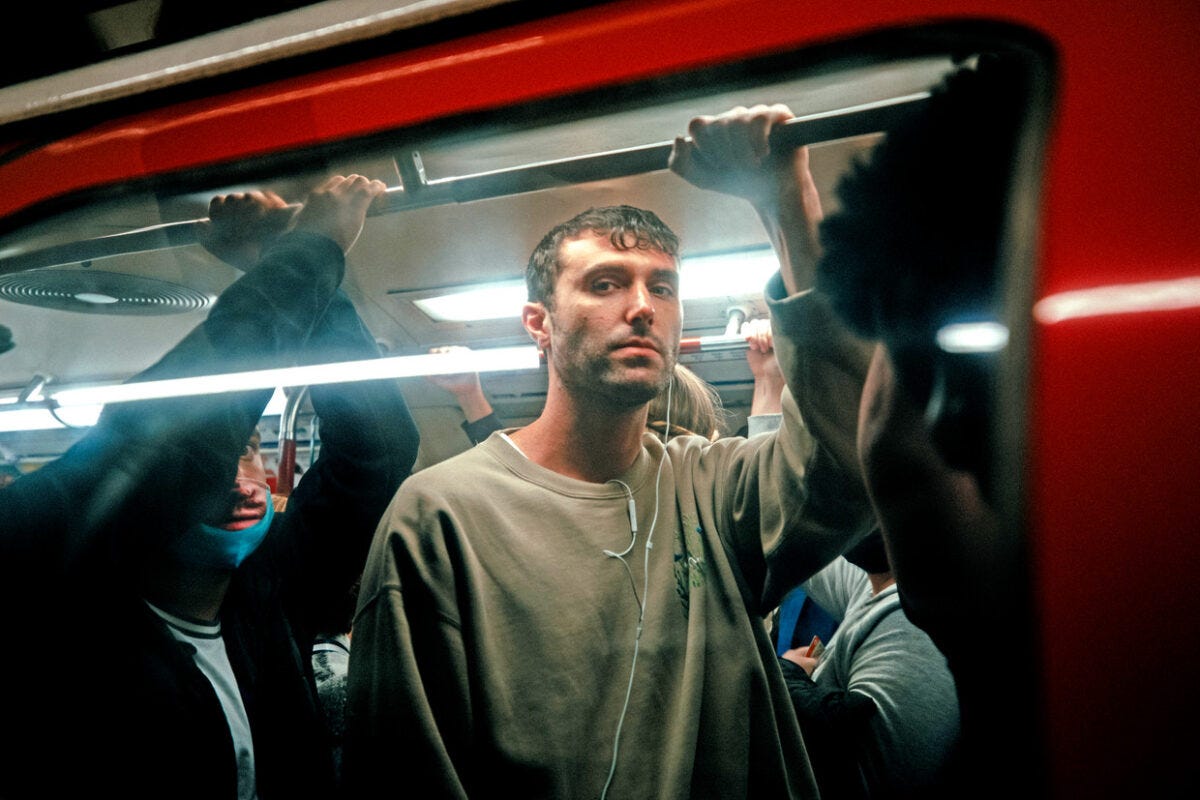
The instinct is the foundation. The quirks make it uncopyable.
Fred collects voice notes. He names every song after a real person - Kyle, Angie, Dermot, Carlos. The construction worker in Atlanta whose offhand “we gone make it through” became the inspiration across is last project The songs aren’t about people. They’re made from people.
Pitchfork called him “the Ed Sheeran of house music” – implying the emotional rawness is manufactured.
But I’d Beg To Differ* and say that Fred actually loves the humanity of the people inside the samples. And that affection can’t be copied.
Then make the distribution match.
Here’s where most brands fall apart. The product is fine. The marketing is fine. But the distribution feels like it was built by a different company - because it usually was.
Fred’s distribution is the maker move, extended outward. The Discord has 60,000+ members, and it feels nothing like a marketing channel.
It feels more like the old-school internet chat rooms I used to get in trouble for sneaking into.
Fans vote on songs, share day-to-day photos, and express their interests. These fan artificats become live show visuals. The community helps make the work, and they know it.
The rituals reward attention and commitment to the thesis, not worldly status.
Before his 65,000-seat LA Coliseum show, Fred reportedly invited 150 fans to a private listening party and served them tea.
These fans were the ones who came to his first LA show in 2021, when he played a thousand-capacity room.
I’m sure this one tea-sesh alone made his early fans feel…remembered.
And feeling remembered goes a long way in both community and brand connection.
Even his partnerships reinforce his “maker” positioning.
He opened a public Dropbox folder full of working files from his latest tour - show posters, vinyl artwork, including the rejected versions, and the actual material his team used to build the era.
Anyone can download and remix it. Dropbox helped distribute it, but didn’t manufacture the partnership or throw their logo on his set with some cool animation.
Ok, let me wrap this up for you.
Most brands have positioning that doesn’t match the product, and a product that doesn’t match the distribution. Different teams optimizing for different metrics.
And the audience can feel that confusion.
Cult brands run a single instinct through every layer.
The maker shows up in the product, the quirks show up in the design, the articulation shows up in the marketing, and the distribution is just the same making, extended.
That’s why cult brands aren’t built by marketers.
Marketers optimize and tweak across layers. Makers stay consistent through them, creating cohesion, legibility, and belief.
It’s not easy, although it looks that way, and it’s also why almost nobody runs it.
You don’t have to be obscure or underground to run this play. You just have to make the work from somewhere real, and keep making it the same way as the business gets bigger.
Here’s a Fred again.. track for your listening pleasure:
If you enjoyed this read or know someone who may find it useful, please share it with them and encourage them to subscribe at https://www.differ.so
Until next time,
Amanda Sabreah
I think achieving cult status is out of reach for most people or brands. Mainly because they’re contrived. But I guess that’s your point…you can’t reverse engineer cultness. And yet there’s a zillion videos on social telling you how to do it.
I really enjoyed reading this piece. You continue to open my eyes to new ways to run a business well while staying authentic and you're a huge inspiration to me. Also, unrelated but we share the same name lol. I hope to meet you one day and work together in some capacity. Looking forward to reading more articles!