


Your inbox. Your feed. The product descriptions, the support replies, the “personalized” cold email that landed this morning. More of it every day, every hour, every minute.
Slop. Slop. Slop.
Machine-made, frictionless, soulless… slop.
(And grifters, but we’ll get there in another read)
Underneath all of it is a quiet fear I’m beginning to see surface - even in well-established founders and teams: “pretty soon, no one will be able to tell mine apart from it.”
AI can generate a song, an essay, content, deep fakes, an app, a brand, a whole deck in the time it takes to pour a coffee.
The internet is filling up with what Merriam-Webster named its 2025 word of the year: slop.
The instinct it triggers in most is to speed up. Produce more. Out-run the machine.
But that’s a losing move.
The machine already won the volume game. Nobody can out-produce infinite.
And volume was never the real problem.
You do want to show up as often as you can, and consistency still wins.
The trap is volume for only volume’s sake, with no real signature or place of human origin.
To be clear, I’m not anti-AI, either. I use it to research, crunch big data sets, and manage cash flow.
The trouble starts when the tool becomes responsible for your core thinking, differentiation, and point of view.
I’d argue the flood is on your side.
Cheap, infinite output is the backdrop that raises the perceived value of the human hand.
When everything around you is AI-generated, the thing a person actually made or puts effort into is more easily perceived as rare and valuable.
So where’s the real game?
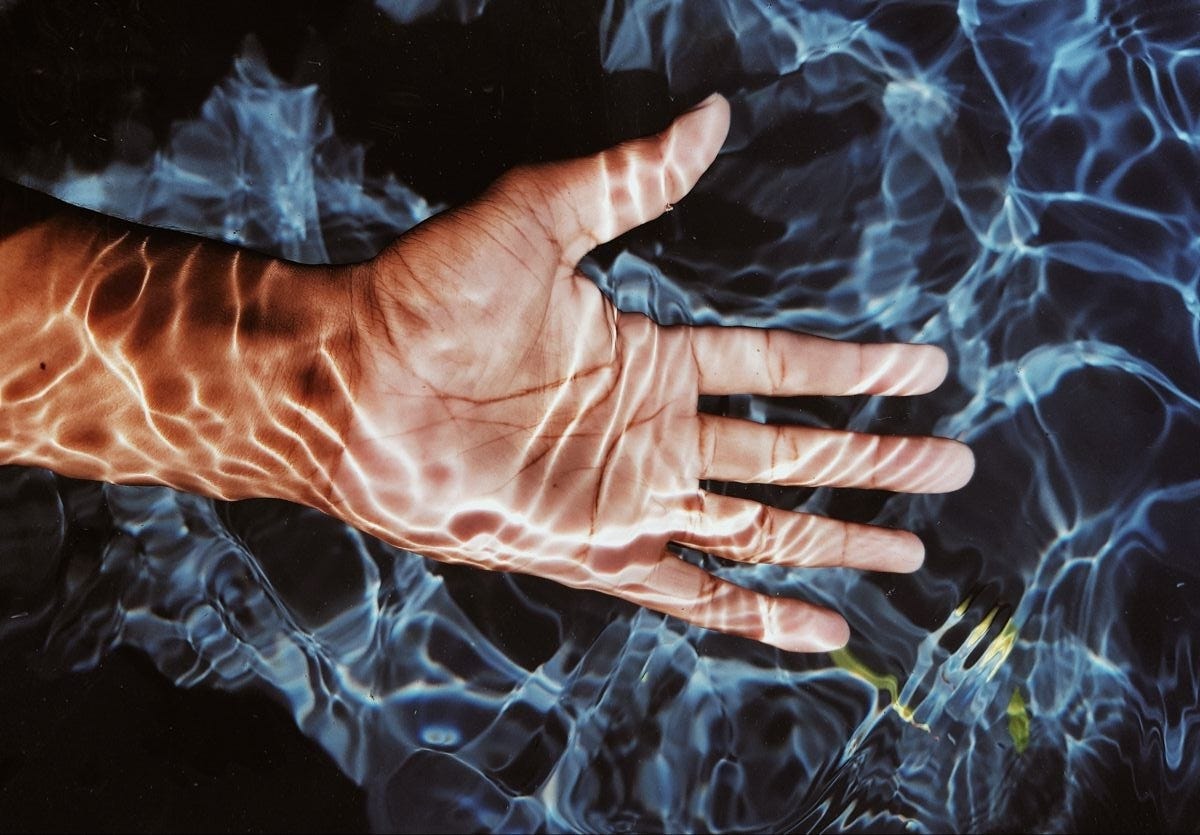
The premium only shows up next to the flood.
Researchers at Columbia Business School found people valued the same piece of art 62% lower the moment it was labeled AI-generated - and the human work earned its premium most when it sat right next to the machine version.
Alone, unlabeled, the “hand-crafted” premium shrank.
Read that twice. Human-made, actually, earns its value in contrast.
The AI flood is what turns a made thing into a gem. So everyone racing to out-produce the machine is charging at the one battle they can’t win.
The takeaway: make the human visible. The clearer it is that a person made this, the more the slop everywhere else works in your favor.
Output is free now. Everything around it appreciates.
When the thing itself becomes infinite and nearly free, value moves to what it can’t carry - trust, judgment, provenance, the story of who made it and why.
A Journal of Marketing study found that people pay around 17% more for the identical product when it’s labeled handmade, reflecting the sense that a real person cared.
A sign that we’re pricing the source behind the product or work now.
You see it in who keeps their pricing power. Chrome Hearts has hand-finished its silver in the same LA workshop since 1988 and still won’t advertise.
The aesthetic gets knocked off everywhere; the source behind it never does - and the more slop floods in, the more that source is worth.
The takeaway: if your value lives in the volume of output, the machine is coming for it. Move your value into what infinite output makes even more scarce. Move it into what infinite output makes scarcer.
Your version of the hand.
This goes well beyond luxury. Every category has its’ version of a “human hand” - the part infinite output can’t reach.
In hospitality, it’s your people. As the world fills with kiosks, QR menus, and chatbot concierges, the host who knows your name becomes the premium.
In two years, a real person running your card (in a timely manner) might actually be an advantage, allowing for 5-10% higher pricing.
In CPG, it’s the product batch: the quirky product design you fought with your manufacturer for, the founder’s voice on the label, the small drop with each product numbered.
In music, it’s the lived struggle - the years it takes to master the craft, the life story too specific to fake, the ability to work and control a crowd, actually sounding good live.
In tech, it’s opinionated design or an actual human answering support when everyone else automated theirs into a void.
Find the hand only you have, and build there.
Ok, in closing...
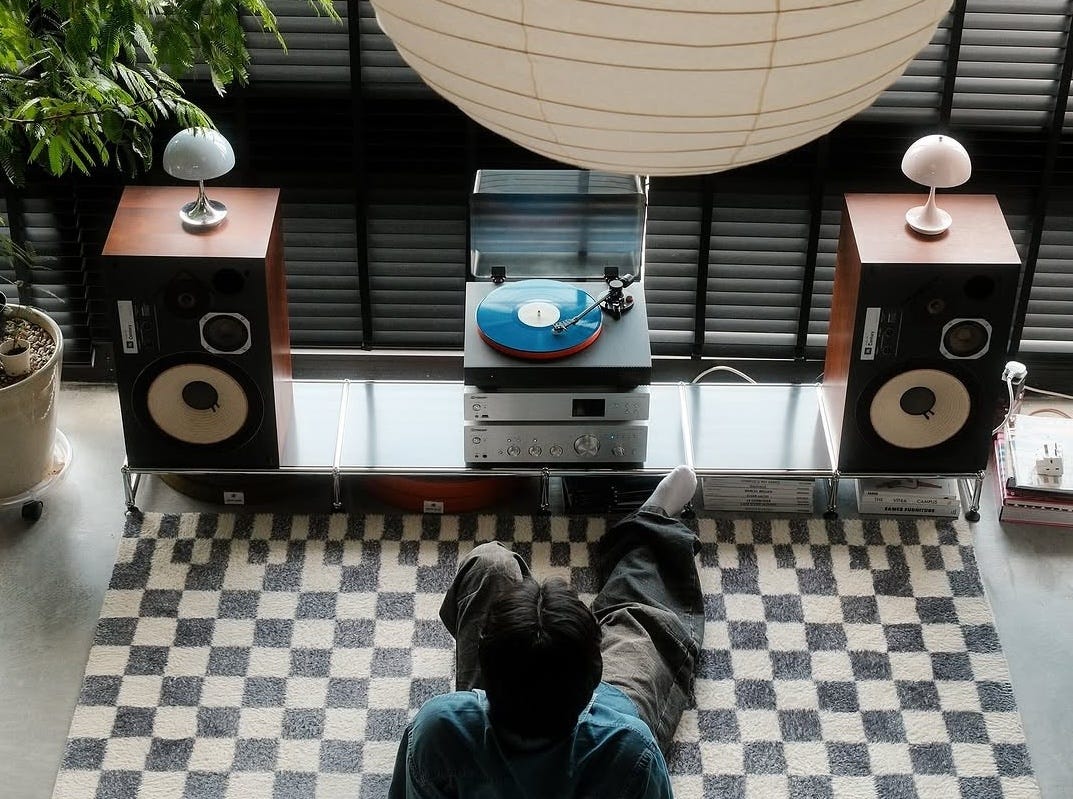
Every time the tools get cheaper, people predict the makers are finished.
Then the makers get more valuable, because cheap makes rare obvious.
We saw it with vinyl - over $1 billion in U.S. sales last year, out-earning CDs three to one, in the middle of infinite streaming.
View slop more like the water that makes your hand dramatically visible.
Stop racing the machine. Build the thing it can’t.
If you enjoyed this post or know someone who may find it useful, please share it with them and encourage them to subscribe: differ.so
~ Amanda
I really like this article and the premise of slowing down to focus on quality vs quantity in the hype of AI. One note I find interesting is the research on “hand made” labelling. It is kind of ironic because clothing is manufactured overseas (by hand) and yet we do not perceive it with any more value. I wonder why fashion tends to be continuously under-valued. Perhaps the distance creates dissonance.
I was just telling two other creative friends this as well. great post.